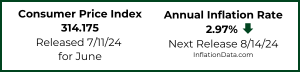
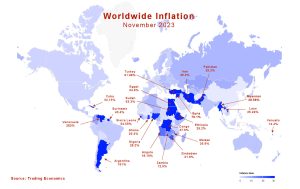
Click for Larger Image Data Source Even though Argentina is in the news due to its high inflation rate it isn't the only country suffering from hyperinflation. It's not even the highest inflation... with Venezuela and Lebanon even higher. In this article, we will look at global inflation rates by country and inflation around the world as of November 2023. The World Inflation Rate The average inflation rate around the world is 11.1%. The global inflation rate surged from 4.35% in 2021, and 3.18% in 2020. Jump to: Top Hyperinflation Countries Inflation in Europe Countries with Deflation Low inflation Countries without Deflation Inflation in Asia Alphabetical … [Read more...]
The Great Phony Disinflation
People are often confused about the difference between DEFLATION and DISINFLATION. Deflation is when prices are actually falling compared to last year, i.e., you will actually pay less for enough items to reduce your cost of living. It doesn't necessarily mean that everything costs less but enough items cost less to make the inflation rate negative. Disinflation on the other hand, simply means that the rate of inflation is slowing. This could be for as little as one month, i.e., annual inflation was 4% in May 2023 and then it was 3% in June 2023. That is a big disinflation. But it was 3.2% in July 2023. So there was no monthly disinflation but there was still disinflation over two months … [Read more...]
Inflation Is a Huge Wealth Redistribution Scheme
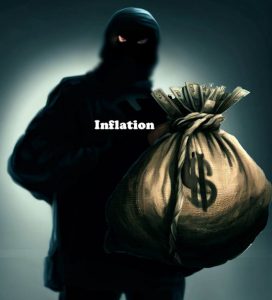
In today's article, Charles A. Smith explains how bankers and bureaucrats conspire to consistently rob the common person through inflation. We have become conditioned to believe that 2% inflation is the norm, and not only that, but it is even desirable and beneficial. Charles argues that, quite to the contrary, productivity improvements should create lower consumer prices, i.e., deflation. The reason that doesn't happen is because "Inflation makes bankers’ and bureaucrats’ lives easier and keeps them in power". ~Tim McMahon, editor. Inflation Is a Giant "Skim" on the American People The price of a McDonald’s hamburger in the United States has inflated 3.75 percent annually over the … [Read more...]
9 Inflation Books You Must Read
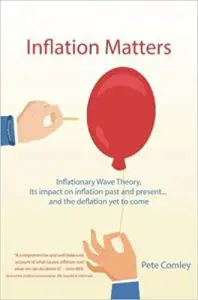
For the average person, deflation, inflation, and even hyperinflation may seem quite murky or mysterious. However, it's actually a lot easier than you'd think. With the right books, the idea of inflation can be broken down for you, and you can start to understand how monetary inflation works. You might also like: How the FED Controls the Money Supply Money Multiplier Velocity of Money Agflation- What is it? Inflation and Velocity of Money What is the Real Definition of Inflation? Here are 9 books that you have to check out if you want to understand more about inflation. 1) Inflation Matters by Pete Comley Inflation Matters is a truly comprehensive book … [Read more...]
5 Countries Most at Risk for Deflation
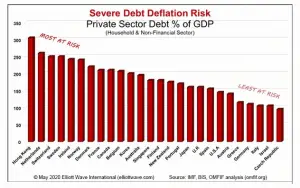
People often confuse Deflation and Depression perhaps because in the 1930s the U.S. experienced a lot of both of them at the same time. This combined with the similarity in the sound of the words tends to compound the confusion. But they are not synonymous, it is quite possible to have an inflationary depression as the Hyperinflation in Weimar Germany from 1919-1923 shows. Just as inflation is more than just rising prices, deflation is more than just "falling prices". In both cases, the terms "inflation" and "deflation" actually refer to the macro "cause" while the change in prices is simply the "effect". Unfortunately, lazy speech tends to confuse the "cause" with the "effect". So when … [Read more...]
The 2008 Financial Crisis
Approximately every 50 to 80 years the world experiences an economic meltdown of catastrophic proportions. The one most people think of is the “Great Depression” of the 1930s. But the more recent example is the 2008 Financial Crisis. This crisis had the potential to be as bad as the Great Depression but Government action i.e. Unemployment Insurance and massive liquidity pumping was able to mitigate the effects somewhat. However, even with those actions, U-3 unemployment reached 10.6% and U-6 unemployment which is more like the measurement used in the 1930s reached 18%. What Caused the 2008 Crisis? The 2008 crisis is the culmination of a series of missteps and failed legislation. … [Read more...]
March Inflation Crashes
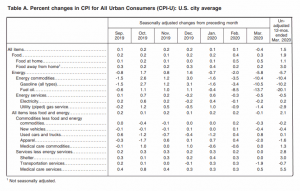
The U.S. Bureau of Labor Statistics (BLS) released its March Inflation report on April 10th, 2020, for the 12 months through the end of March 2020. Annual Inflation Down Sharply Inflation fell sharply to 1.54% in March from 2.33% in February and 2.49% in January. CPI Index in February was 258.679 and fell to 258.115 in March. Monthly Inflation for March was -0.22%, February was 0.27% typically January through May are highly inflationary so this was VERY unusual. The FED has massively cranked up the "printing presses" using "Quantitative Easing" in an effort to stimulate the economy in the wake of COVID-19. FED Funds Rate down sharply. Next release May 12th Annual … [Read more...]
Inflation: The Hidden Tax
The media and the Central Bank (i.e. The U.S. Federal Reserve aka. the "FED") tells us that a little bit of inflation is a good thing. Inflation gets the ball rolling, greases the wheels of commerce, and stimulates the economy. The FED sets as a goal 2% inflation, so inflation must be good for us, right? Two Forms of Inflation Well, it is good for someone but not necessarily for you i.e. the consumer. The first problem comes because there are two different types of “inflation” and by interchanging them we end up with a form of Orwellian “double-speak”. The first kind of inflation is “monetary inflation” i.e. an increase in the overall money supply. This is accomplished by a complex process … [Read more...]
The Quantity Theory of Money
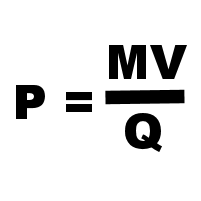
We have written quite extensively on the cause of inflation in articles like: How does the Money Supply affect our Inflation Rate? in What is Inflation? and Inflation Cause and Effects. One of the keys to understanding inflation is the Money Multiplier. Because of the "Fractional Reserve system banks are only required to keep a small fraction of the money on deposit as "reserves" against potential withdrawals the bank can loan out the majority of the money on deposit to earn interest. This results in a multiplication effect increasing the money supply by vast multiples. This "leverage" can work in either direction. In April 2010, I wrote an article explaining how this can result in … [Read more...]
Central Banks Are Pushing the World Towards Deflation
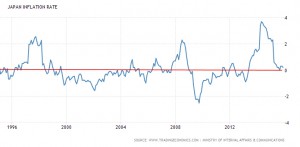
With the entire world struggling to ward off global deflation, it is prudent to understand why the current actions by the Central Banks are not heading in the correct direction. The massive amount of Quantitative Easing by the Central Banks, globally, have not been converted into inflation as was earlier anticipated. This article will shed light on various aspects leading to deflation. Investopedia defines ‘deflation’ as “a general decline in prices, often caused by a reduction in the supply of money or credit. Deflation can be caused also by a decrease in government, personal or investment spending. The opposite of inflation, deflation has the side effect of increased unemployment since … [Read more...]
