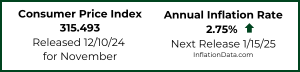
It is critical to understand the correlation between inflation and commodity prices and the effects of inflation on commodity prices themselves.
In recent years, the global financial markets have been in flux as they’ve gone up and down repeatedly. The commodities market has been especially volatile with items like gold and oil going up significantly. While a number of different factors contribute to the prices of commodities, inflation is one aspect that has a direct impact on the price of commodities.
Inflation and Commodity Prices
 Inflation is a process that occurs when the purchasing value of a currency is lowered. This is usually determined by comparing the prices of a good or commodity on two different dates. This means that when inflation occurs, it helps drive up the prices of commodities. When inflation occurs, it drives up the price of oil, gold, silver, corn, soybeans, wheat and all other commodities.
Investment vs. Speculation
Although the inflation itself definitely has a direct impact on the price of commodities, some other outside factors also come into play. Once the inflation has driven up the price of the commodity, it also impacts the value of the commodity in other ways. As soon as inflation starts driving up the price of a commodity speculators begin to jump on board. This is called “momentum investing” as opposed to value investing where investors look for low prices and a bargain. Legendary investor Warren Buffet is the King of value investing looking for bargains or “value” so he can buy companies when they are worth more than the current price.
Momentum “investors” buy things simply because they are going up in the hopes of finding a “greater fool” who will pay even more for it. This should not be called investing but rather “speculating” as it isn’t based on sound reasoning and so it can come to an abrupt end when the bubble bursts.
For example, when investors see that the price of oil is going up, they start to buy it, in hopes that it will continue to go up. At that point, the demand for oil increases because the speculators are buying the futures contracts. Once the demand for oil increases because of the increased speculation, then the price goes up even further.
This means that the inflation has a twofold impact on the price of the commodity. It has a direct and an indirect impact on the prices of commodities.
Why So Much Inflation?
Since it’s obvious that inflation has a direct impact on the prices of commodities, it is important to figure out exactly what is causing the inflation. Although there are a few different factors that contribute to inflation, one of the biggest factors is the Federal Reserve and other central banks like it around the world.
These central banks typically make a habit of printing more money. When they decide to stimulate the economy, they simply print up more money to use to buy sovereign debt. For instance, in the case of the United States, the Federal Reserve has been printing of money to buy United States Treasury bills at record low interest rates. The Federal Reserve is now the single largest creditor of the United States.
When more money is added to the money supply, this dilutes the value of the currency. The value of the dollar erodes and the excess liquidity starts sloshing around the economy driving up prices. Some of the money finds its way into various commodities like gold, where a small amount of increase can move prices significantly, even more money finds its way into real estate and the stock market eventually producing bubbles that pop and cause massive dislocations and with it much misery.
How Inflation Impacts Consumers
Inflation is nothing more than a hidden tax on the poor because they own few assets to appreciate and are hit hardest by cost increases. Central banks and governments use inflation as a way to pay off their debts with cheaper dollars in the future. Because of this, the tax payer and the consumer are the ones who have to bear the brunt of the system’s decisions. This leads to higher prices at the gas pump and higher prices at the grocery store.
What Investors Can Do
If you are an investor, it’s not all a “doom and gloom” scenario for you to consider. If you have the money to invest, you must hedge against inflation and protect some of your wealth.
If you look at recent history, you know that the government probably is not going to get its act together anytime soon. You also know that the Federal Reserve and other central banks are not going to stop printing money until the system either collapses or some other system takes over.
Because of this knowledge, you know that inflation will continue to be a part of the economy. If you will take some of your money and invest in commodities like gold and silver, you can hedge against inflation. You’ll be able to make returns as inflation keeps pushing the prices of these commodities higher and higher.
In recent years, the returns of people who invested a lot of money in gold have been astronomical. While returns may not always be that high over a short period of time, you can bet that over time, the value of gold will continue to move upward as the inflation keeps going up.
See Also:

Leave a Reply