
In the field of economics, many experts agree that the long-term effects of inflation are dependent on the money supply in a country. Alternatively, the price levels are directly proportional to the money supply in the long run. Therefore, the money supply or the currency in circulation can directly affect the prices of goods and services. The confusion arises because both monetary inflation (an increase in the money supply) and price inflation (an increase in consumer prices) are both commonly referred to as “inflation”.
Even though many people consider money printing to be the cause of more money in circulation, physical paper in circulation is actually only a small percentage of the total money supply, so the majority of the increase actually comes from other methods. The central bank may purchase government securities or bonds, the FED can reduce interest rates charged to member banks, or the mandatory reserve requirements the banks must keep in cash reserves can be decreased, among other causes.
Velocity of Money
Another factor causing price inflation is “velocity of money”. The velocity of money is the speed that people want to dispose of their money. As people’s perception of inflation increases, they want to “unload” their cash before it loses too much value, so they are less concerned about price comparisons and more concerned with spending quickly. This actually becomes a self-fulfilling prophesy as increased demand actually drives up prices even quicker.
Price inflation is when the general prices of goods and services are higher than previously, which results in lower purchasing power. Purchasing power is defined as the value of a currency in terms of the number of services or goods one unit of that particular currency can purchase.
Now that you have a better understanding of the basics, let’s look at the areas inflation can affect.
Purchasing Power and Inflation Hedges
When there is high price inflation in an economy, per capita purchasing power decreases because salaries are not adjusted as quickly as prices. So consumers are hurt as their salaries buy fewer and fewer goods. While inflation doesn’t affect income as severely as unemployment does, it can still have profound long-term effects.
One effect of inflation is a general redistribution of income from the people who are least capable of protecting themselves to those who are the most able to protect themselves. Assets known to be more inflation resistant are called “inflation hedges“. Examples of typical inflation hedges are precious metals and real estate. Since precious metals are physical assets (i.e. commodities) their price tends to rise with other commodities and may actually increase faster than other commodities if investors perceive them as a good inflation hedge.
As an example, let’s consider a long-term U.S. loan vs a short-term UK loan
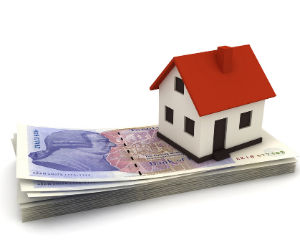 Real Estate, in addition to being a physical asset, has the added advantage of leverage. If a U.S. person locks in a fixed interest rate for a long period of time you can pay off your U.S. mortgage with ever-cheaper dollars. So long-term, high inflation benefits borrowers over lenders.
On the other hand, if you live in the UK and get short term loans UK, so repayment will occur with Pounds of much the same value as that which you borrowed. Thus, inflation will have much less impact on the purchasing power of your repayments and your UK banker will not be terribly concerned with the inflation rate.
Variable inflation rates were designed to protect bankers, (in both the US and the UK ), from unexpected changes in the inflation rate, by increasing the mortgage interest rate, if inflation gets out of hand.
Wealth vs. Income
Many people commonly confuse the terms income and wealth and think of them as interchangeable. But, that is not the case. These two terms are different measures of economic well-being.
Income stands for “earnings” or flow of money, usually considered to be from wages or salaries. Wealth, on the other hand, is a measure of the value of a person’s assets minus their liabilities. Assets include cash, real estate, precious metals, bonds, stocks, fine art, and more. But if you borrowed to buy that real estate you obviously don’t own all of it so you must subtract from the value of the real estate the amount you owe the bank. The balance will be your “net worth” or “wealth”.
In addition to work generating income, wealth can be used to generate income as well. Stocks generate dividends, deposits generate interest, and real estate can generate rents. Unfortunately, precious metals usually don’t generate income unless you loan them out.
Furthermore, just because a person has a substantial income doesn’t automatically mean they have great wealth. They could be spending most of the money they make and thus have less wealth. A person with a low income could actually be wealthier than a person with a high income. For instance, a Doctor making $500,000 a year, driving a leased Masserati, and living in a rented Penthouse could be spending his entire income and have a net worth of only $200,000 in assets. A retired plumber, on the other hand, could have a paid-off home worth $250,000, and a retirement account worth $750,000 thus he has $1,000,000 in assets and perhaps only gets $37,500/yr. in income ($750,000 x 5%).
With an understanding of the difference between wealth and income, it is possible to come to a conclusion of how inflation may affect wealth as well.
If your income keeps up with inflation you won’t need to dip into your assets in order to maintain your current standard of living. And depending on the allocation of your assets their value may or may not keep up with inflation.
You might also like:

Leave a Reply