• Home
  • Related Sites
    • Financial Trend Forecaster
      • Moore Inflation Predictor
      • NYSE Rate of Change (ROC)
      • NASDAQ Rate of Change (ROC)
      • Crypto ROC- BTC & ETH
    • Unemployment Data
      • Historical Employment Data
      • Unemployment Rate Chart
      • Labor Force Participation Rate
    • Optio Money
    • Elliott Wave University
    • More Resources
  • Definitions
    • What is Inflation?
    • What is Core Inflation?
    • Inflation vs CPI
    • What is Deflation?
    • What is Disinflation?
    • What is Agflation?
    • What is Stagflation?
    • What is Hyperinflation?
    • What is Quantitative Easing?
    • What is Quantitative Tightening?
    • What is Velocity of Money?
    • What is Fiat Currency?
    • How Do I Calculate Inflation?
    • What are “Sticky Prices” and Why Do They Matter?
  • Featured Content
  • About Us
  • Feedback
    • Sitemap
  • Subscribe Now

InflationData.com

Your Place in Cyber Space for Inflation Data

  • Numerical Inflation Data
    • Current Inflation Rate
    • Monthly Inflation Rate (Moved)
    • Historical U.S. Inflation Rates
    • Historical CPI
  • Inflation Charts
    • Ann. Inf. Rate Chart
    • Long Term Inflation >
      • Ave. Inf. by Decade
      • Total Inf. by Decade
      • Inflation 1913-1919
      • Inflation 1920-1929
      • Inflation 1930-1939
      • Inflation 1940-1949
      • Inflation 1950-1959
      • Inflation 1960-1969
      • Inflation 1970-1979
    • Cumulative Inflation
    • FED Monetary Policy and Inflation
    • Inflation and Recession
    • Confederate Inflation (1861 – 1865)
    • Misery Index
    • The 3 Stages of Inflation
    • 15-Yr Inflation Trends Chart
  • Inflation Calculators
    • Cumulative Inf. Calc.
    • How Much Would it Cost
    • Historical Inflation Calculator since 1774
    • Salary Inf. Calc.
    • U.K. Inf. Calc.
    • Cost of Gas Calc.
    • Net Worth Calc.
    • Lifetime Earnings Calc.
    • Savings Goal Calc.
    • Financial Calculators
  • Inf. Adjusted Prices
    • Energy >
      • Inflation Adj. Gas Prices
      • Historical Oil Prices Chart
      • Crude Oil Price (Table)
      • Natural Gas Prices
      • Electricity Prices
      • Oil vs Gold
    • Gold >
      • Inflation Adjusted Annual Average Gold Prices
      • Gold is a “Crisis Hedge” not an  “Inflation Hedge”
      • Comparing Oil vs. Gold
    • Corn Prices
    • Education Inflation
    • Housing Prices
    • Mortgage Rates
    • NYSE Index
    • Inf. Indexed Bonds
    • Movie Revenues
    • Inflation-Adjusted Wages
  • Cost of Living
    • Calculate Cost of Living
    • Cost-of-living Adj. (COLA)
    • Consumer Price Index CPI
      • Historical CPI
      • Current CPI
      • CPI Release Dates
    • Gas Prices >
      • Cost of Gas
      • Cost of Gas Per Month
      • Gas vs. Oil Price Chart
    • Food Prices 1913 vs 2013
    • Health Insurance
  • Blog
    • Key Inflation Articles
    • International Inflation
    • Historical Inflation Rates for Japan (1971 to 2014)
You are here: Home » Blog » Government » The Federal Reserve » What Impact Does Interest Rates and Inflation Targets Have on Stocks?

What Impact Does Interest Rates and Inflation Targets Have on Stocks?

Published on March 9, 2020 Updated on March 31, 2021 by Guest Author Leave a Comment

Why is The FED’s Targeted Inflation Rate Important in the US?

Since 2012, the Fed has targeted an inflation rate of 2%. They have deemed this a healthy rate of inflation, necessary for economic growth. According to the Board of Governors of the Federal Reserve System, since 1977, the Federal Reserve has operated under a mandate from Congress to “promote effectively the goals of maximum employment, stable prices, and moderate long term interest rates” this is called a “dual mandate” in that it is supposed to balance a healthy economy with stable prices not just target low inflation.

When the FOMC (Federal Open Market Committee) meets, their job is to fulfill this mandate. The Fed has decided that the targeted inflation rate is 2%. By allowing prices to rise by that percentage over time, and working towards achieving that inflation differential, the Fed can sell government bonds, buy government bonds, raise interest rates, or drop interest rates accordingly.

According to an article by the Federal Reserve Bank of St. Louis, “To clarify, this does not mean inflation must be 2 percent in the short term; rather, monetary policy should be set so that inflation moves toward the target over time and, in the absence of unpredictable changes in either supply or demand, would reach 2 percent in the medium term… stating an inflation goal—and maintaining credibility with respect to that goal—helps the FOMC manage the public’s expectations when it comes to inflation. In turn, this helps in achieving price stability as per the Fed’s mandate.”

Inflation and the “Business Cycle”

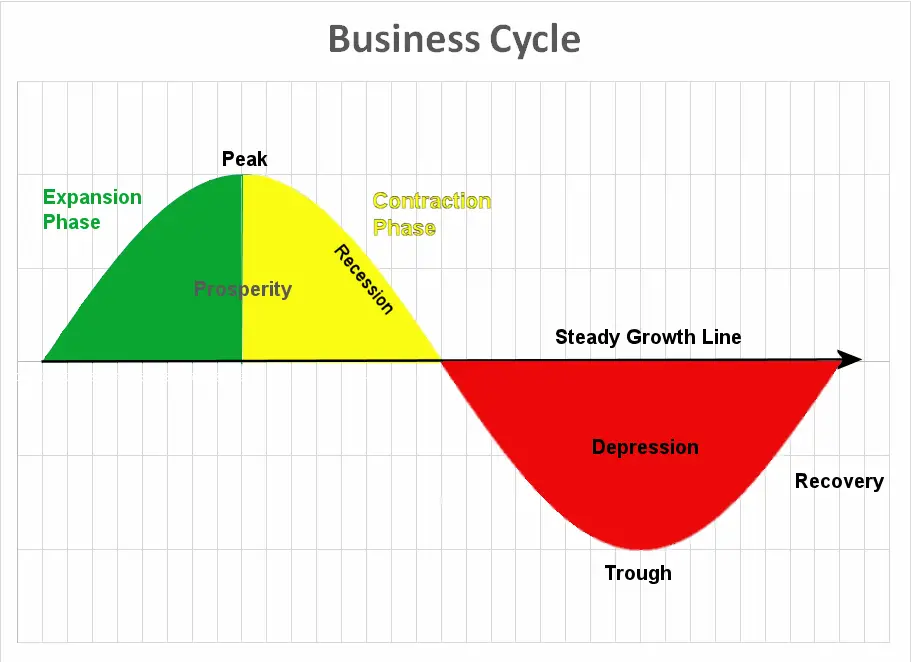
The various phases of the business cycle include expansion, peak, contraction (recession), trough, recovery. Provided the general trend is sloping upwards, the overall performance of the economy will be growth-oriented.
Business

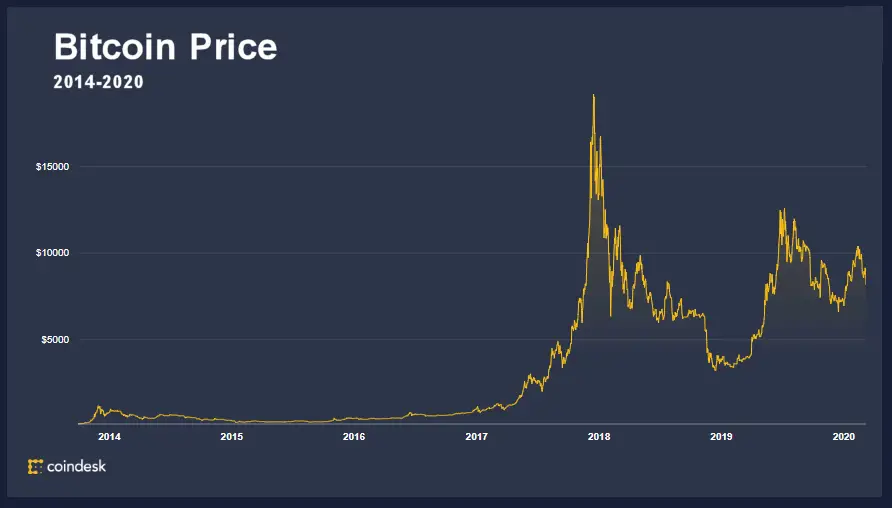
If the value of assets in an economy grows faster than its real value, bubbles begin to appear. All asset bubbles are subject to correction. In recent years, multiple asset bubbles have come to pass, including the ‘Bitcoin Bubble’ which resulted in this digital currency – contrarian investment option – rising towards $20,000 per unit, and ultimately being compared to the Tulip Bubble in the Netherlands during the 1600s.
Bitcoin Chart

Chart Courtesy of CoinDesk

Many other asset bubbles have come and gone, including the ‘Dot Com’ boom and bust of the early 2000s, and the recent spectacular run of form on Wall Street which saw stocks hitting record highs before retreating the wake of the unrelenting assault by the coronavirus a.k.a. COVID-19.

All of these factors – intrinsic and extrinsic – seek to achieve equilibrium in the financial markets; that ultimately where the balance rests.

The volatility we are currently witnessing on global financial markets is indicative of a system that is out of balance. Bullish sentiment results in rapid and oftentimes unwarranted appreciation of equities. Often this is followed by increased volatility with sharp drops and even sharper rises culminating in a massive blowoff.  This is certainly evident with trends that can be seen with stock trading activity at Plus500 and other leading trading platforms.

What Impact Does an Interest-Rate Change Have on The Value of Stocks?

When the Fed reduces interest rates, this accelerates the velocity flow of money through the economy by making it cheaper to access capital (business loans, mortgages, credit card financing et cetera) thereby encouraging spending in the economy.

The impact that this has on the stock markets can be viewed from two perspectives. From a company perspective, less money needs to be spent on repaying interest on loans, and corporate debt (i.e. bonds) thereby increasing company profits which can be passed on to shareholders in the form of dividends, or to consumers in the form of more affordable pricing. From the other side, the trader/investor side, increased personal disposable incomes result from lower interest rates thus allowing for more money for investments.

Consider the impact of a decreased mortgage repayment as a result of the Fed cutting interest rates. That increase in personal disposable income can be geared towards increased consumption expenditure which is aimed at economic growth.  If someone suddenly has more disposable income available at the end of the month, that can be channeled towards increased purchases which will boost the profits of listed companies, or towards trading and investing activity in the markets directly.

Traders and investors will see the inherent benefit of lower interest rates in lower “margin rates” so they may be able to purchase more shares for the same amount of capital.

On the other hand, if interest rates increase, this typically indicates that the economy is overheating and the Fed is trying to reduce the money supply. This can “spook” the market causing a sell-off directly or it can induce investors to switch to interest-bearing investments rather than stocks. When interest rates are rising, people tend to shy away from stocks and new mortgages and credit card debt, in favor of fixed-interest-bearing investments.

You might also like:

  • Inflation: The Hidden Tax
  • How the FED Controls the Money Supply
  • Modern Monetary Theory
  • Investing to Fight Inflation

Filed Under: The Federal Reserve Tagged With: inflation, interest rates, stock market

Leave a Reply Cancel reply

Your email address will not be published. Required fields are marked *

This site uses Akismet to reduce spam. Learn how your comment data is processed.

Recent Posts

  • May Inflation Up to 4.25%
  • May 2026: BLS April Inflation
  • How will FED Chairman Warsh affect Rates and Inflation?
  • Ben Cowan: Is the Fed Heading Toward Checkmate?
  • The Truth About Truflation vs. the BLS’s CPI

Subscribe Now

eTrends Signup Form

A Message from Our Editor

Eliminate Debt

Post Archives

Sponsored:

As a Seasoned Investor I thought I'd seen everything... But recently I discovered TradingView which has really improved the information I have at my fingertips.~ Tim McMahon, editor

TradingView gives me an edge... including powerful charting tools, real-time market data, and a global community of traders—all in one easy to use platform. It has hundreds of indicators, and even custom scripts for more advanced users, and you don't need to change Brokers just use its seamless brokerage integration... TradingView isn't just a charting tool—it's your full trading command center.

Trade smarter. Trade faster. Check Out TradingView for free.

----------

The Best Place to Buy Your Crypto

Coinbase is the largest Crypto Trading platform in the U.S. and the easiest to use. ~Tim McMahon, editor

Check out Coinbase here

Home | Articles | Sitemap | Terms of Service | Privacy | Disclaimer | Advertise With Us

Copyright © 1996-2026 · Capital Professional Services, LLC · Maintained by Design Synergy Studio · Admin

Do Not Sell My Personal Information