Impact of Inflation on Bonds
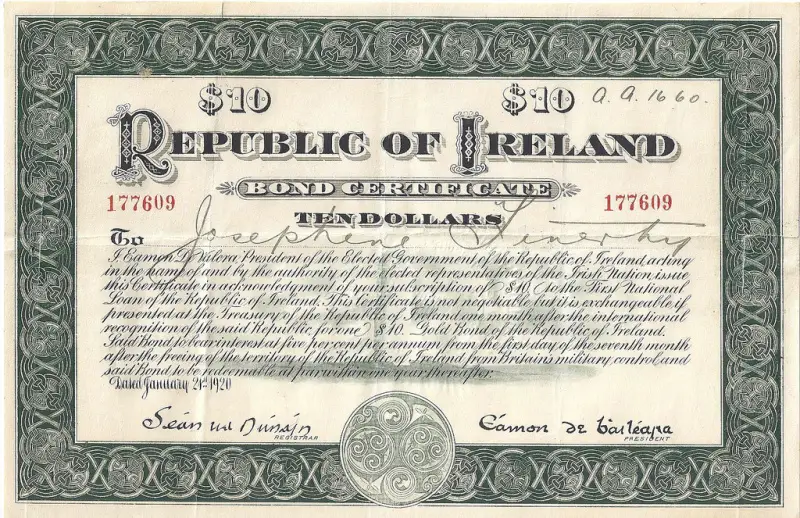 Bonds are often considered a risk-free (or nearly risk-free) investment suitable for “widows and orphans”. While they are generally safe, they have several weaknesses in the modern marketplace, inflation, rising interest rates and default risk. Before buying a bond, make sure you understand how bonds work and how inflation can have an effect on bonds.
The Nature of Inflation
Inflation is often described as the general rise of prices in the economy. However, the increase in prices is merely the effect, called “price inflation.” Monetary inflation, which is the expansion of credit in the financial markets, is what often (but not always) drives price inflation. As credit expands, and more money becomes available to the marketplace, the price of goods and services generally rise in response. This is because the inflation increases the supply of money in circulation while simultaneously decreasing the value of money as a result. Like a domino effect, this decrease in the value of money pushes prices of goods and services higher. The money supply is, tracked using a series of M’s (M1, M2, and M3) quantify the amount of money in circulation. For example, M1 is the most restrictive measure of money, ie. it is just money in circulation but does not measure bank reserves. M2 is regarded as a broader classification than M1. M2 represents money and “close substitutes.” M2 includes all of M1, plus savings accounts, time deposits of under $100,000, and balances in retail money market mutual funds. M3 included all of M2 (which includes M1) plus large-denomination ($100,000 or more) time deposits, balances in institutional money funds, repurchase liabilities issued by depository institutions, and Eurodollars held by U.S. residents at foreign branches of U.S. banks and at all banks in the United Kingdom and Canada. But for some reason the FED stopped tracking M3. See Good-Bye M3. Looking back it is possible that because of all of the derivatives and Mortgage Backed securities even the FED couldn’t tell how much money was really in circulation.
How Bonds Work
Bonds are debt instruments. In other words, they are loans. One party lends money to another in exchange for interest and a return of the investment principal after a specified period of time. This specified period of time is called the “maturity” of the bond. Bonds have a fixed interest payment on the face value of the bond, when the bond pays, it will pay the stated interest rate on the bond contract until maturity. Typically the face value of a bond is $1000 so a Bond with a 5% “coupon rate” will pay 5% of $1000 or $50 per year. But if the overall market interest rate falls to say 4% a 5% bond would be a great deal so the seller of the 5% bond can charge more (a premium). In this case the bond in order for the bond to yield 4% it would have to sell for $1250 because $1250 times 4% is $50. A bond’s price and interest rate are inversely correlated. This means that as interest rates fall, bond prices rise and as interest rates rise bond prices fall.
How Inflation Impacts Bond Investments
As we saw bond prices are derived from the prevailing market interest rates. Market rates are partially controlled by the Federal Reserve (“the Fed”). When the economy slows down, the FED has several tools at its disposal to stimulate the economy.
1) The FED can expand the money supply which makes everyone feel richer and spend more money. But this causes inflation.
Unfortunately, if the rate of inflation outpaces the return paid on the bond, then the bond investor effectively loses money on the deal even though there is interest being paid. For example, if a bond pays 4 percent annually, but inflation runs at 5 percent, then the investor is losing 1 percent in terms of the value of the dollars he is being paid even though he is actually earning money and paying taxes on the interest.
2) The FED can lower interest rates. This encourages borrowing by consumers because it is cheaper to borrow money thus increasing economic activity and stimulating the economy. As we saw lowering interest rates is good for bonds.
Unfortunately, nothing the FED does is in a vacuum and every action has its consequences. If the FED increases the money supply too much and the inflation rate gets out of hand just like a run away nuclear reactor the FED has to slow the reaction down. To do this it has to raise interest rates which as we saw is also bad for bonds.
At this point in history the FED has lowered interest rates to near zero, it has nowhere lower to go. And unfortunately there are side effects of low interest rates as well. When rates are too low although everyone wants to borrow at 0% no one wants to loan at 0%. So lenders go looking for other opportunities like Gold, which have less risk and more potential for return.
For More Information See:
- Inflation Cause and effect
- Good-Bye M3
- M3 Money Supply Numbers are Back- Sort Of
- What are Company Bonds?
- Invest in Structured Bonds?
- More Bond Articles
About the Authors:

This article was a collaborative effort of Tim McMahon, editor of InflationData.com and Hayley Spencer.


Climate Change Agreement now orders every country recieves a minuim of Ten Trillion Stock of your currency paid in full by Controlling Company ATT credit bureau and Treasury dept executive director of stock ownership giving free shares upon agreement signer of one zillion county treaser check any county sufficent to start creating your cure.
A joke???