Why Has The FED Been Raising Interest Rates?
The Federal Reserve (Fed) started raising interest rates in March 2022 in an effort to combat inflation. As of the end of July 2023, the Fed’s target rate limit is 5.5%, the highest level in 15 years.
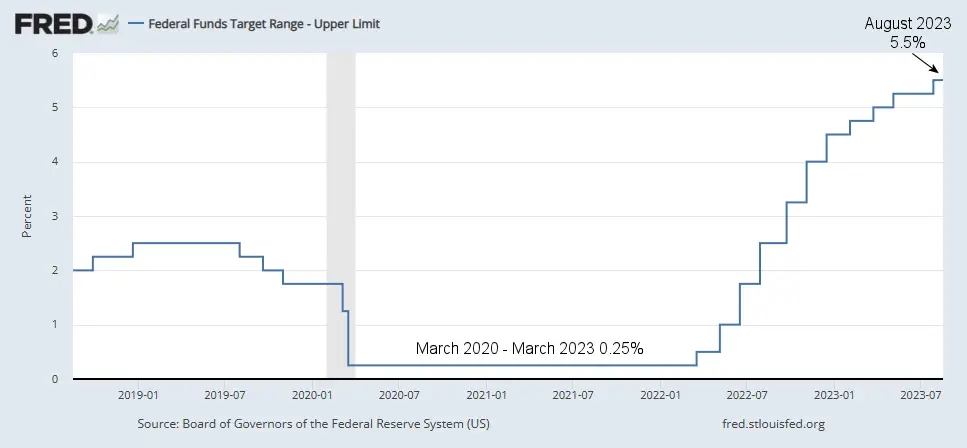
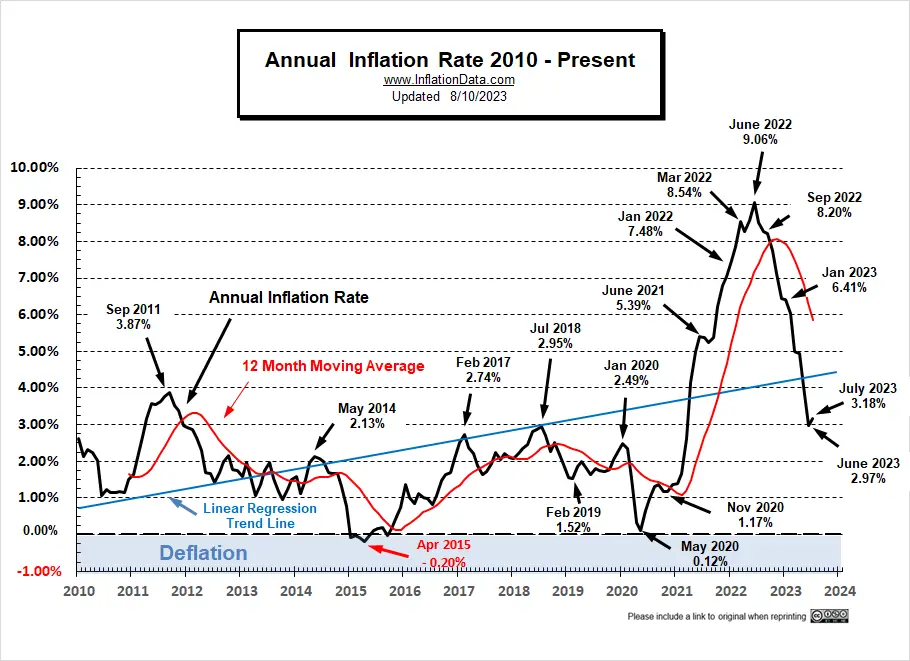
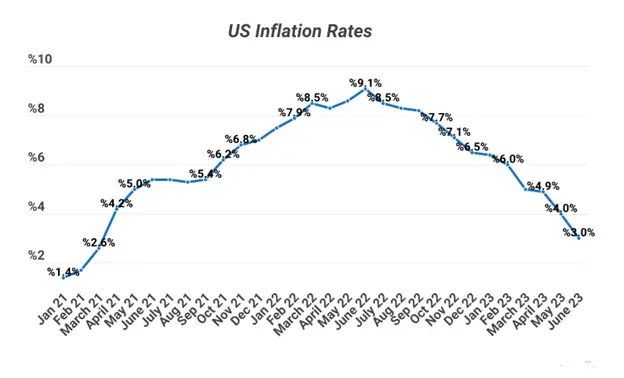
There are a few reasons why the Fed is raising interest rates so aggressively. First, inflation was at a 40-year high. In June 2022, the Consumer Price Index (CPI) rose 9.06% year-over-year, the fastest pace since December 1981. This means that the cost of goods and services was rising rapidly, which was eroding the purchasing power of consumers and businesses.
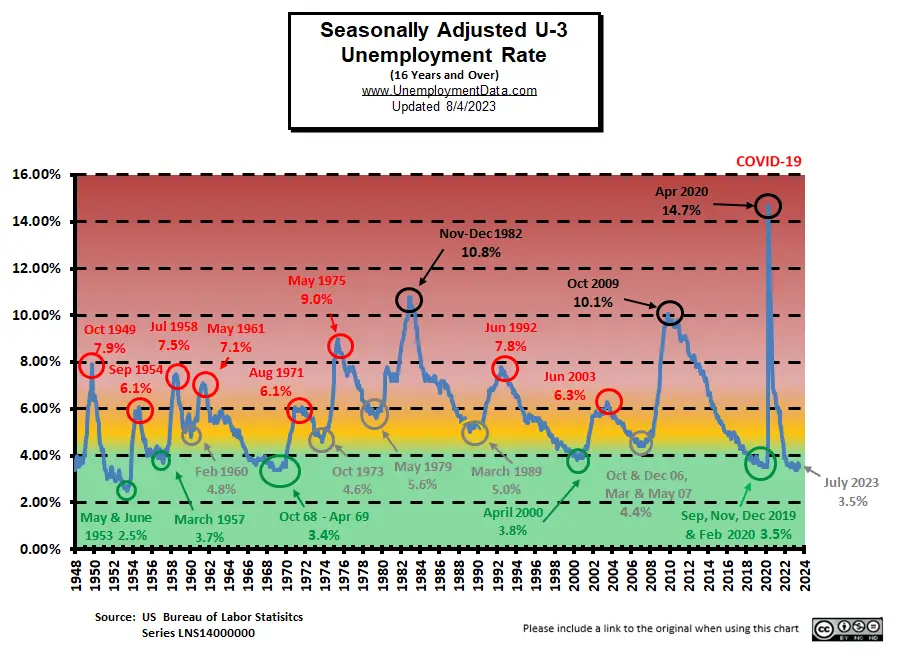
Second, the economy is still strong. The unemployment rate posted a 50-year low of 3.4% in February 2023 (for January 2023) and was still at 3.5% in July 2023. This means there is continued strong demand for goods and services, which puts upward pressure on prices following the rapid rebound and pent-up demand following COVID.
Third, the Fed is worried that inflation expectations are becoming unanchored. This means that people are starting to expect inflation to remain high in the future, which can make inflation self-fulfilling through a process called Velocity of Money.
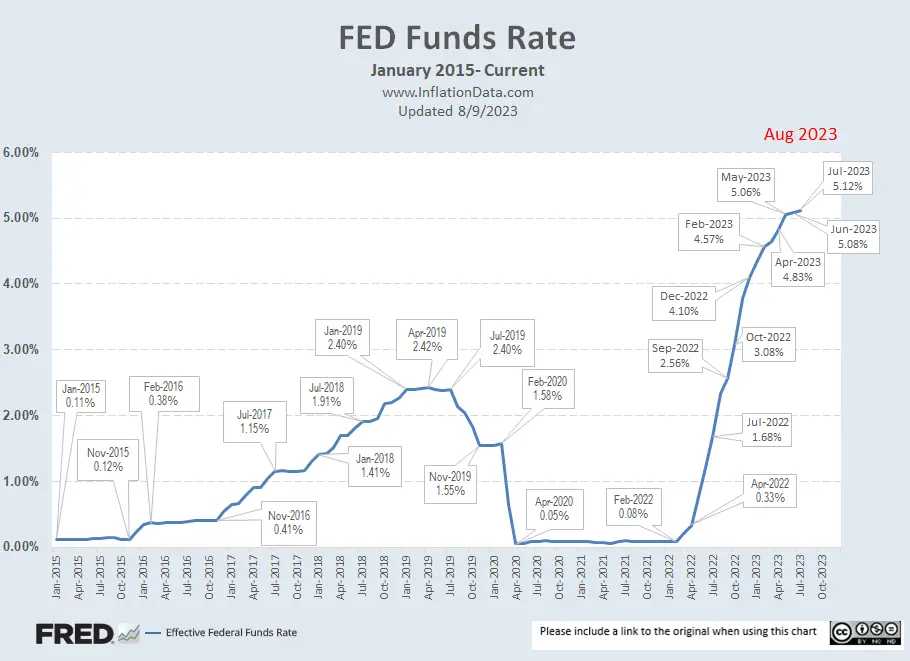
Actual FED Funds Rate
By raising interest rates, the Fed hopes to cool the economy and bring inflation down. Higher interest rates make it more expensive to borrow money, which slows down spending and investment. This can help to reduce demand for goods and services, which will put downward pressure on prices.
The Fed is expected to continue raising interest rates in the coming months. However, it is unclear how high the Fed will raise rates before it starts to see a slowdown in the economy. If the Fed raises rates too high, it could trigger a recession.
Why do Investors Prefer Lower FED Rates?
Reasons why investors prefer lower Fed rates:
- Lower borrowing costs: When interest rates are low, it is cheaper for businesses to borrow money to invest in new projects. This can lead to increased economic growth and job creation. It is also cheaper for consumers to borrow money to buy homes, cars, and other big-ticket items. This can boost consumer spending and help to keep the economy humming.
- Higher stock prices: When interest rates are low, investors are more likely to buy stocks because they are a relatively attractive investment. This is because stocks tend to offer higher returns than bonds when interest rates are low. As a result, stock prices tend to rise when interest rates fall.
- Increased risk appetite: Lower interest rates can also lead to increased risk appetite among investors. This is because investors are more willing to take on riskier investments when they believe the potential rewards outweigh the risks. This can lead to higher investment in riskier assets such as stocks, commodities, and emerging market currencies.
However, what’s good for investors isn’t necessarily good for the economy. For example, lower interest rates can lead to inflation. This is because when it is cheaper to borrow money, people and businesses tend to spend more money, which can drive up prices.
Additionally, lower interest rates can make it harder for banks to make money, which can lead to a decline in lending. This can make it difficult for businesses to expand and for consumers to finance big-ticket purchases.
Factors That Influence Future FED Rate Decisions
Ultimately, the Fed’s decision about interest rates is based on a complex assessment of the current economic and financial conditions. The Fed is under a “Dual Mandate” (which initially contained two items but now three items) to promote maximum employment, stable prices, and now also to maintain moderate long-term interest rates. So, it must carefully weigh all of the factors involved before making a decision.
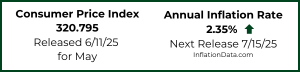
- Inflation: The Fed’s primary goal is to keep inflation in check. If inflation is too high, the Fed will raise interest rates in an effort to cool the economy and bring inflation down. Here’s the current inflation pace:
- Economic growth: The Fed also wants to ensure that the economy is growing at a healthy pace. If the economy is growing too fast, the Fed may raise interest rates to prevent inflation from getting out of control. However, if the economy is growing too slowly, the Fed may lower interest rates to stimulate growth.
- Job market: The Fed also considers the state of the job market when making interest rate decisions. If the unemployment rate is low, the Fed may be more likely to raise interest rates in an effort to prevent inflation. However, if the unemployment rate is high, the Fed may be more likely to lower interest rates to stimulate job growth.
- Financial markets: The Fed also monitors financial markets when making interest rate decisions. If there is a lot of volatility in financial markets, the Fed may be more likely to raise interest rates in an effort to stabilize the markets.
- International factors: The Fed also considers international factors when making interest rate decisions. If other central banks are raising interest rates, the Fed may be more likely to follow suit. However, if other central banks are lowering interest rates, the Fed may be more likely to do the same.
Can We Expect Lower Rates In 2023?
Likely not. The government has promised to work against rising prices, even though we’re seeing signs that inflation is cooling. It’s still too early for any big changes in 2023. So, it’s expected that interest rates will probably stay the same. Although, we may have seen the final increase in the FED’s target range. We have to remember that the FED’s target for inflation is 2%, so it may continue to keep pressure on interest rates until inflation falls back to its target.
But according to Bloomberg, things might change in 2024. It depends on how things are going in the economy. If inflation keeps going down, but the economy gets worse, like many experts think might happen, the FED may be forced to reduce its target interest rates to relieve some of the pressure on the economy. The big question is what happens with jobs. If unemployment rises rapidly and the economy tanks, rates will come down. If unemployment stays low, the FED could keep rates where they are until inflation comes down.
For more information:

Overall, good clear explanations.
There is a glitch, though. You write “First, inflation is at a 40-year high. In June 2023, the Consumer Price Index (CPI) rose 9.06% year-over-year, the fastest pace since December 1981.”. That was June 2022, not June 2023. The year-over-year drop 3x in June 2023, which is quite a dramatic turnaround from the previous year.
Your reasoning here explains why the Fed was raising rates a year ago. Granted, the regression line shows an upslope, and the moving average is still high, but one could reasonably argue at this point that the Fed is overreacting. Perhaps it is not, but the argument that you advance here doesn’t address conditions today.
Erik,
You are absolutely correct! I’ve updated the article a bit to address your points. Thanks for your input.
Tim McMahon, Sr. Editor.