The Federal Reserve System
If you saw the HBO movie “Too Big to Fail,” you may have the notion that the Federal Reserve System, commonly known as The Fed, deals with high level banking issues that have worldwide implications. And you would be right. But The Fed also regulates banking functions that affect individual Americans, ranging from regulating debit card overdraft fees and limiting gift card fees to issuing U.S. Treasury savings bonds.
History of the Federal Reserve
The Founding Fathers were cautious about establishing a central bank, thinking that it would encourage irresponsible borrowing by the government. As a result, America functioned without a central bank throughout the eighteenth and nineteenth centuries. In fact, it was not until 1913 that Congress created The Fed by passing the Federal Reserve Act, which was signed into law by President Woodrow Wilson.
What Does the Fed Do?
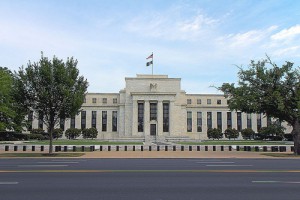 The Fed is charged with three major functions: open market operations, regulating the discount rate and setting reserve requirements. Open market operations refer to the buying and selling of securities of the United States government and federal agencies. The discount rate is the interest rate charged to commercial banks and other financial institutions when they borrow from the Federal Reserve Bank. Reserve requirements are the legally required minimum amounts of reserve funds that banks and other depository institutions must keep in reserve to back up deposits held by their customers.
The Fed also monitors monetary policy and makes adjustments to boost employment, maintain stable prices against inflation and deflation and supervises commercial banks to ensure that the money their customers deposit is safe. In addition to these functions, The Fed provides financial services to American and foreign financial institutions, including playing a major role in cashing checks and processing electronic deposits. The Fed is also in charge of distributing coins and paper money to commercial banks, credit unions and other institutions.
Board of Governors
The Fed is managed by a seven-member Board of Governors. Each member is appointed by the President of the United States and confirmed by the Senate to serve a single term of fourteen years. The President also appoints one person to serve as Chair and a second person to serve as Vice Chair, both of whom must be confirmed by the Senate and each of whom serves four-year terms.
Board members also serve as part of a twelve-member Federal Open Market Committee. The other five members of the committee are presidents of regional reserve banks. One of the five members is always the president of the Federal Reserve Bank of New York. The main responsibility of the Federal Open Market Committee is to determine the amount of currency that is available and to regulate the cost of borrowing.
Federal Reserve Districts
The Federal Reserve System divides the United States into twelve regional Federal Reserve Districts. Each district has a branch of the Federal Reserve Bank to service its needs. The twelve reserve banks are located in the following cities: Atlanta, Boston, Chicago, Cleveland, Dallas, Kansas City, Minneapolis, New York, Philadelphia, Richmond, San Francisco and St. Louis. In addition to their official functions, the regional Federal Reserve banks create educational materials and either host or sponsor events designed to engage the public. For instance, the Federal Reserve Bank of Chicago maintains a free Money Museum on the premises that features various exhibits relating to the workings of The Fed.
See Also:
- The Federal Reserve & Inflation
- The Fed Resumes Printing
- What is Quantitative Easing?
- The Long Road to Inflation Perdition
- Does The “FED” Really Just Print Money?
- Understanding the FED
- Why Facebook Works, and Democracy Does Not
- Energy Markets Being Driven by Politics?
- Interview with former Budget Director David Stockman about the FED Austerity, Housing and more.
Editor’s Note:
The Federal Reserve and its functions are quite controversial, with many people saying that it is not “Federal” at all but a Private corporation designed to print money out of thin air. What do you think about the FED? Feel free to post your comments about the FED below.
For Further Reading:
- The Discount Rate
- Federal Open Market Committee
- Money Museum: Federal Reserve Bank of Chicago
- Money Smart Week: Federal Reserve Bank of Chicago
- Open Market Operations
- Reserve Requirements The Structure of the Federal Reserve System
- What Is the Purpose of the Federal Reserve System?
About the Author:
Guest post contributed by Charles Ronson.
Photo Credits: by DerFussi | The Federal Reserve

Leave a Reply