Throughout history, people have been attracted to gold. It is considered one of the most precious metals. In ancient times it was primarily used as jewelry or for fabricating religious items. Often gold was the only money so there was no such thing as “Investing in Gold” since holding gold coins was simply considered “saving”. Today however, since our money is not based on anything but “the good faith and credit” of the government, investing in gold is not only possible but also advisable.
But for all its history, there isn’t really that much gold around. If you collected all the gold ever mined, from every corner of the Earth and put it into a single pile it would only fill a 5-story building ( a cube roughly 68 ft. 20.7m on each side). So its scarcity is a factor in its value but so is beauty and its ability to be easily molded while still being durable.
Gold has Preserved Wealth for Thousands of Years
 Gold came in common use in 3000 B.C. when Egyptians started making it into jewelry. It wasn’t until years later that gold began being used as a medium of exchange.
There are examples of gold’s influence throughout history from the Greek and Roman empires to China and India. According to Wikipedia, “The earliest known English coins are Gold pieces… originally weighing 4.5g, but in the Anglo-Saxon context apparently based on a revised standard of 3.9g implemented in Gaul from around 580 [AD].”
The gold sovereign came into existence in 1489 under King Henry VII.
The History of Gold as Money in the U.S.
Due to their unique beauty and physical qualities, people have relied on precious metals as stores of value throughout history, so whenever crisis reared its ugly head people have sought the safe haven of gold and silver. However, throughout U.S. history gold and silver have had an inconsistent function as money. At the beginning coins were scarce and the U.S. was not minting its own so coins minted by other countries such as the Spanish “Pieces of Eight” served as money in the Colonies.
The United States established a bimetallic standard in 1792. The Coinage Act of 1792 states: “That the proportional value of gold to silver in all coins which shall by law be current as money within the United States shall be as fifteen to one, according to quantity in weight, of pure gold or pure silver.” In other words, both Silver and Gold could be issued as legal tender at a fixed rate of exchange. But the government often had difficulty with the exchange rate and sometimes had budget issues requiring the printing of paper notes.
During the Civil War, the U.S. printed “Greenbacks” as currency to fund the war. The Confederate States printed massive amounts while the Northern States were more reserved in their printing. See Confederate Inflation and the Civil War. By the end of the war, Confederate money became virtually worthless while Northern greenbacks were also suffering to a lesser extent. In an effort to stabilize the economy the new government established convertibility from Greenbacks to Gold. However, it wasn’t until 1900 that the U.S. was back on an official gold standard. But it didn’t last long.
In 1933, President Franklin Roosevelt took the U.S. off the gold standard and declared it illegal for U.S. citizens to own gold. After forcing citizens to sell at a lower price, he immediately repriced gold 69% higher (equivalent to a 69% tax on Gold owners). He then made Gold only available to foreign governments. But the government continued to debase its assets (i.e. inflation). By the 1970’s other countries began demanding payment in gold rather than worthless paper so Nixon “closed the gold window” and stopped official convertibility for foreign governments as well. See the whole story here: Gold and Inflation.
Gold as a Commodity
From 70’s gold and silver became a commodity the same as iron, sugar, oil, etc. Rather than a fixed price set by the government, nowadays the value of gold is determined by the market. Thus it fluctuates based on supply and demand. In times of fear demand rises and recently the Chinese government has been trying to build its reserves in an effort to hedge against a possible fall in the value of its U.S. Treasury Bond holdings. See: Why (and How) China is Boosting the Price of Gold
Even though it is now traded as a commodity, in case of a crisis, some financial advisors suggest investing a portion of your assets in gold (usually 5-10%). There are several ways to invest money in gold.
Ways to Own Gold
Historically, there was only one way to own gold and that was to have it in your physical posession (or buried in your back yard). But as people began to fear theft, they began to leave it on deposit with the local goldsmith who gave them a receipt. When they needed to use the gold to make a large purchase rather than go to the goldsmith take out their gold hand it over to someone who would then take the gold back to the goldsmith, people began just trading the receipts. Unfortunately, since the gold was rarely claimed goldsmiths began using the gold themselves, so that if everyone tried to claim their gold at once it was not there. Today there are a variety of ways to own gold.
Investing in Physical Gold
Gold Bars-
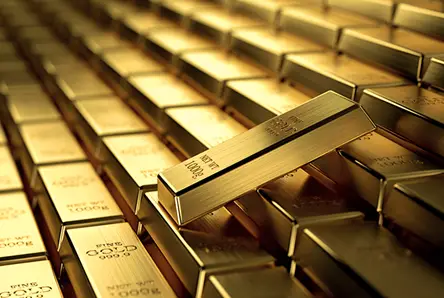 Since it was legalized in the 1970’s, you can own physical gold today in a variety of forms. Large quantities of gold are formed into bars (roughly 400 Troy Ounces which would be about a half million dollars at today’s gold prices) so this is only used by central banks and bullion dealers.
Smaller denomination gold bars are available from 1 kilo, 500 grams, 250 grams, 100 grams, 50 grams, 10 grams, 5 grams, 2.5 grams, etc. They are also available in a variety of ounce denominations from 100 ounces down to fractions of an ounce. Generally, the larger the Gold bars or rounds, the lower the premium will be per ounce allowing you to save money when you buy larger Gold bars and rounds. But the larger denominations makes it more difficult to “make change”.
Gold Rounds and Coins-
You can also own gold in rounds or coins. The major difference is that coins are minted by a government and has a legal tender value. However, it may not have its weight listed and may not be an even weight. A “round” on the other hand is minted by private mints and has no face value but is generally marked with its weight in either ounces or grams.
Investing in Gold without Physically Holding It
Much like with the ancient goldsmiths, today it is also possible to own gold without physically holding it. There such ways as investing money in gold receipts, derivatives and mutual funds/ETFs. In a nutshell, if you want to buy an actual piece of gold you will have to pay a “premium” for minting or assaying to ensure that the gold is pure and to provide the dealer’s profit. Today there are a variety of ways to buy “paper gold” in the derivatives markets that use gold as the underlying asset and make deals that allow the delivery of gold to the client at the definite point in the future. An ordinary investor can also use services of gold ETFs that are traded like shares on stock exchanges. These derivatives avoid the “premium” on the purchase of gold but may have other fees and expenses involved.
Less Profitable Ways of Investing in Gold
In Eastern countries such as India, husbands traditionally gave their wives golden jewelry. Historically, these women would wear all their personal wealth because any day a husband could kick them out and the only wealth they would have will be the things they were wearing at the moment. Investing money in jewelry made of precious metals was advantageous to the women in this case. But it is not the best way to invest in gold because typically jewelry costs 50-100% more than the value of the metal it contains. Even though they may not have to worry about being kicked out, many eastern countries still place a high value on displaying their wealth in the form of jewelry.
This article was written in conjunction with Lisa Griffin she is a blogger and freelance writer whose lifestyle credo is “You only have so many hours in a day, let others make the money for you!”


Leave a Reply