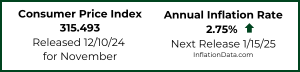
We often hear the cry that those greedy corporations are raising prices and causing inflation. If they would only bite the bullet and stop raising prices all would be well. They even have a name for it “greedflation”. As recently as April 27th 2023, Bloomberg published an article entitled ECB (The European Central Bank) Wakes Up to Greedflation as Key Culprit in Price Struggle. The article tells us that French politician and President of the European Central Bank Christine Lagarde blames “corporate margins” for inflation. Today’s article looks at the problems with that view. ~Tim McMahon, editor
Private Corporations Don’t Cause Price Inflation. Governments Do.
By Daniel Lacalle
 Interventionists always blame inflation on anything and everything except the one thing that makes aggregate prices rise: Issuing more units of currency than the real demand. Seller inflation is the same excuse and fallacy as cost-push inflation. A way to confuse citizens and assign causation to something that cannot make aggregate prices rise.
Let’s debunk some myths. No corporation or conglomerate can make aggregate prices rise. Some neo-Keynesians blame corporations for price increases, but that makes no sense. If corporations were able to make aggregate prices rise, the United States would experience incessantly high rates of price inflation. Actually, corporations are the ones that lower prices because they can generate economies of scale, gain market share, and produce better goods and services at a lower cost using innovation and technology. There is no single corporation that has a market share large enough to make aggregate prices rise, and even less for a prolonged period. The reader may say that corporations work as an oligopoly, but if that were the case and they were stupid enough to increase prices for no reason, they would be able to affect one or two prices for a while until competition and technology wipe them out.
Remember that aggregate prices are not the same as unit prices. If Exxon, for example, decided to increase the price of gasoline for no reason it may hurt consumers for a while, but this does not make the price of everything else go up. In the oil market, OPEC, which is a cartel of state-owned and controlled oil giants, is unable to keep oil prices above $80 a barrel in nominal terms -even less adjusted for inflation… and yet neo-Keynesians want you to believe that a company with less than 20% market share in the U.S. economy is going to make all prices rise in unison and, even more laughably, make all their competitors do the same. Why did small, independent oil companies make natural gas and oil collapse in the fracking revolution? Competition and technology. Why did the oil giants not prevent that decline? There is no such thing as an oligopoly just because there are four or five large corporations.
Similarly, a small group of large corporations in an open economy cannot make aggregate prices rise either, even if they wanted to. Imports of cheaper goods and services would soar, be they from China or elsewhere.
If giant corporations could decide prices at will, they would never run into financial difficulties, reduce their earnings, or face a declining return on invested capital… but those three events are constantly happening in the market. Consensus estimates are too high? Hey, just increase prices, beat estimates, and make profits soar. It does not happen.
Large corporations are built on delivering more and better goods at the best possible prices. You cannot have a market leader with consistently bad price structures. Large corporations are, by definition, price takers not price setters. They would have enormous financial problems if they ran a massive working capital build to sell millions of units of a good that is incorrectly priced. They would quickly find their warehouses full of unsold items, leading to losses and even bankruptcy. Demand elasticity works everywhere, and if the amount of money in the system is the same, the seller does not have the luxury of raising prices without limit even when costs rise.
Even if one seller was able to raise prices at will, without any demand impact for a long period (something that I have never seen) that seller would not dictate aggregate prices. At all. One giant or group of multinationals, like Apple or Exxon, does not make the CPI rise nine percent. They do not even scratch the surface of aggregate prices. Because aggregate prices are set in an open economy by millions of agents and the marginal price setter is never a corporation with giant working capital requirements.
Monopoly Pricing
Extractive monopolies or oligopolies do not exist in open economies like the United States. Extractive oligopolies only exist in the minds of neo-Keynesians because that is exactly what they create when governments close borders to trade and direct the economy. The only way in which you can create an extractive monopoly is if the government enforces and defends it. In any other circumstance, that business would disappear in a few months.
If aggregate prices rose due to the evil works of corporations, why do those corporations not raise their prices in other currencies in other countries? Why is the same European mega-cap seeing 20% price increases in Germany and seven percent in Switzerland? It is not the same measure. One is issuing more units of currency than what the real economy demands, the Eurozone, and the other, Switzerland, is not. That is why there is a Big Mac Index that tracks real inflation. McDonald’s does not raise prices; it sells affordable food. The only difference is the purchasing power of the currency.
So why do these “experts” blame large corporations for something—i.e., price inflation—they do not cause? Because the objective is to increase government control of the economy and destroy private business that are large enough to be economically independent. They do not care about small businesses because those are already asphyxiated by taxes and small and medium enterprises are easily forced to depend on the government.
Neo-Keynesians want you to believe that unit price movements are the same as aggregate prices. And it is not. The only thing that makes all prices rise in unison is the constant destruction of the purchasing power of the currency issued by a monopolistic player: the state.
Neo-Keynesians need you to believe that the quantitative theory of money does not exist so they can achieve their goal: full government control of the economy and the currency. And what happens when that goal is achieved? Scarcity and high inflation. Always. But the people close to the politicians become very wealthy. That is socialism. State enforced cronyism.
Governments never curb inflation because they benefit from it. Money creation is never neutral and disproportionately benefits the only monopolistic player in the economy: the state that issues the currency. If you think your salary is losing purchasing power due to the evil workings of a monopoly, you are right, because the only monopoly you suffer every day is the monopolistic currency issuer that grows larger and makes you dependent by destroying your real salary and your deposit savings’ purchasing power.
More Articles by Daniel Lacalle:
You might also like:
- How Inflation Impacts Merchants
- Radical Decentralization: the Key to Wealth and Freedom
- Default by Inflation
- Do “Red States” Ride the “Blue State” Gravy Train?
- A Guide to Good Money
- Are Countries Getting Smaller?
- Housing Is Getting Less Affordable
- The Fed’s New “Tightening” Plan Is Too Little, Too Late
- Can the Dollar Retain Its Ultimate Currency Status?”
About the Author:
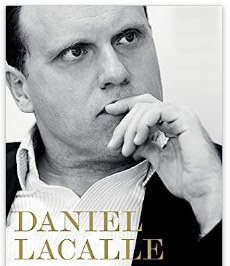 Daniel Lacalle, PhD, is a professor of global economy at IE Business School in Madrid, an economist, and a fund manager. He was Ranked as one of the top twenty most influential economists in the world in 2016 and 2017 by Richtopia, and the author of the bestselling books Freedom or Equality (2020), Escape from the Central Bank Trap (2017), The Energy World Is Flat (2015), and Life in the Financial Markets (2014).
This article originally appeared here and has been reprinted under the creative commons license.

Leave a Reply